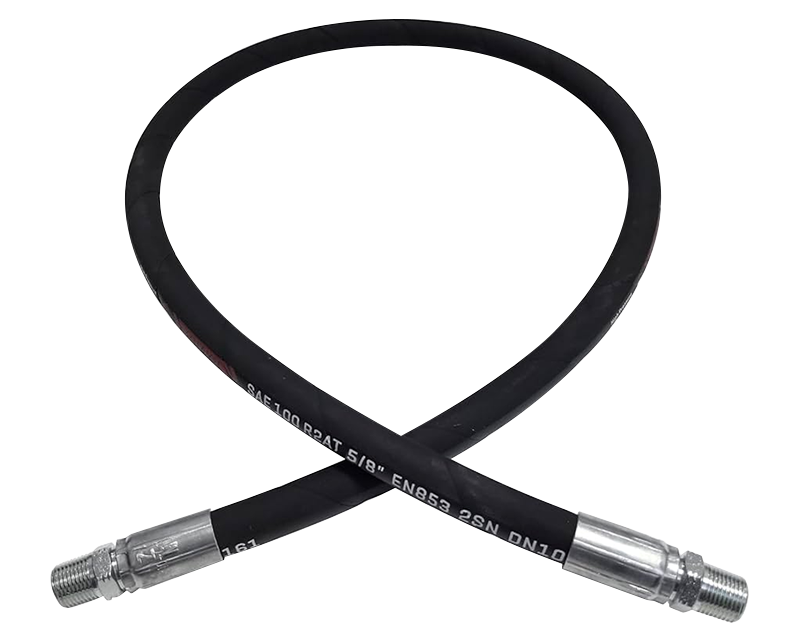
A hydraulic hose usually lasts about 3 to 7 years under normal operating conditions, but service life can range from less than 1 year to more than 10 years depending on pressure, temperature, fluid type, installation, and maintenance. Regular inspections, correct hose selection, and proper routing can extend lifespan and reduce unexpected failures in hydraulic systems.
Hydraulic hoses are designed to transfer pressurized fluid between hydraulic components such as pumps, valves, cylinders, and motors. Their lifespan depends on how the hose is used rather than a fixed replacement date. In many industrial applications, hoses operate for thousands of pressure cycles every month, and repeated expansion, contraction, and vibration gradually affect the rubber tube and reinforcement layers. A properly installed hose working below 70% of its rated pressure may last several years longer than one operating close to its maximum capacity.
The working environment has a major influence on hose durability. Construction equipment, agricultural machinery, mining vehicles, and factory systems expose hoses to different levels of stress. A hose used indoors at stable temperatures may remain functional for 5 to 10 years, while a hose exposed to outdoor weather, abrasion, and frequent movement may need replacement after 2 to 4 years. In a survey of industrial maintenance practices published in 2020, mechanical damage and aging were among the most common reasons for hydraulic hose replacement.
Pressure cycling is one of the main reasons hydraulic hoses gradually lose performance. Each time hydraulic pressure rises and falls, the hose structure expands slightly and returns to its original shape. Over thousands of cycles, reinforcement wires and rubber layers experience fatigue. For example, a hydraulic system operating 8 hours per day at 30 cycles per minute can create more than 3.8 million pressure cycles in one year.
The pressure rating of the hose should always match the hydraulic system requirements. A hose designed for 3,000 psi should not continuously operate near that limit because pressure spikes can exceed normal working pressure. Many manufacturers recommend selecting a hose with a working pressure rating higher than the system requirement to provide additional operating margin.
Temperature is another factor that affects how long a hydraulic hose remains usable. Most standard hydraulic hoses are designed to operate between approximately -40°C and 100°C, although some specialized products can handle higher temperatures. Continuous exposure above the recommended range accelerates rubber hardening and reduces flexibility. Research on elastomer materials has shown that aging reactions become faster as temperature increases, with every 10°C rise often producing a noticeable reduction in material life.
Hydraulic fluid compatibility also affects hose performance. Different fluids contain different chemical components, and hose materials must be selected accordingly. Petroleum-based oils, synthetic fluids, and biodegradable hydraulic fluids can interact differently with rubber compounds. Using an incompatible hose material may cause swelling, cracking, or softening within months instead of years.
The selection of the correct hydraulic hose type helps prevent these problems. Common hose structures include braided hoses, spiral wire hoses, and textile-reinforced hoses. Braided hoses are widely used for medium-pressure applications, while spiral wire hoses are commonly selected for high-pressure equipment that experiences repeated shock loads.
| Hose Type | Common Application | Typical Pressure Range | Expected Service Period |
|---|---|---|---|
| Textile reinforced hose | Low-pressure equipment, air and fluid transfer | Up to about 300 psi | 2–5 years |
| Steel wire braided hose | Construction and industrial machinery | Around 3,000–6,000 psi | 3–7 years |
| Spiral wire hose | Heavy-duty hydraulic systems | Above 5,000 psi | 2–6 years |
Installation quality often determines whether a hose reaches its expected lifespan. A correctly selected hose can still fail early if it is installed incorrectly. Common installation problems include twisting, excessive bending, insufficient length, and contact with sharp surfaces. A hose twisted during assembly may experience uneven stress distribution, reducing service life by a significant amount.
Proper routing is especially important in mobile equipment. Excavators and loaders often have hydraulic hoses moving continuously during operation. If a hose rubs against metal parts for several hours every day, the outer cover can wear away and expose reinforcement layers. Some maintenance reports indicate that abrasion-related damage accounts for more than 30% of hydraulic hose replacements in heavy equipment applications.
Regular inspection helps identify problems before hose failure occurs. Operators usually check several conditions during routine maintenance:
-
Cracks or cuts on the outer cover
-
Oil leakage near fittings
-
Bulges or unusual changes in hose shape
-
Damaged protective layers
-
Excessive stiffness or loss of flexibility
-
Signs of contact with hot surfaces
A visual inspection every few weeks is common for heavily used equipment. For machines operating in demanding environments, inspections may be performed daily or before each shift. In 2019 maintenance guidelines for industrial hydraulic systems, scheduled inspections were recommended as an effective method for reducing unexpected equipment downtime.
Storage conditions also affect hose lifespan before installation. New hoses should be kept away from direct sunlight, moisture, ozone-producing electrical equipment, and extreme temperatures. A hose stored correctly may remain suitable for installation for several years, while poor storage conditions can accelerate rubber aging before the product enters service.
“A hydraulic hose should be replaced based on condition, operating environment, and manufacturer recommendations rather than waiting until leakage or complete failure occurs.”
The application environment creates different replacement expectations. Agricultural equipment often experiences seasonal temperature changes and outdoor exposure, so hoses commonly require inspection after several years of use. Construction machines may require more frequent replacement because of vibration, movement, and contact with rough materials. Industrial production systems with controlled environments generally provide longer hose service periods.
| Application | Main Causes of Wear | Common Replacement Interval |
|---|---|---|
| Excavators and loaders | Vibration, abrasion, pressure changes | 2–5 years |
| Agricultural machinery | Weather exposure, seasonal use | 3–6 years |
| Factory hydraulic systems | Continuous operation, heat | 5–10 years |
| Marine and offshore equipment | Salt exposure, moisture, temperature changes | 2–5 years |
The fitting connection is another area that requires attention. A hose assembly is not only affected by the hose itself but also by fittings, seals, and connection methods. Loose fittings may create leakage, while incorrect crimping can weaken the connection between the hose and fitting. Many hydraulic failures occur at connection points rather than in the middle section of the hose.
Maintenance records can help determine replacement timing. Recording installation dates, operating hours, inspection results, and previous failures allows companies to identify common replacement patterns. For example, if a group of hoses consistently fails after 4 years under similar conditions, replacement planning can be scheduled before that period.
Modern hydraulic hose designs have improved through stronger reinforcement materials and more resistant rubber compounds. Some high-performance hoses are designed for millions of pressure cycles and severe industrial environments. However, material improvements do not remove the need for proper installation and inspection.
The lifespan of a hydraulic hose is determined by many combined conditions. A hose operating within its pressure and temperature limits, using compatible fluid, and receiving regular inspection can provide reliable service for many years. Replacing hoses before serious damage appears helps maintain equipment performance and reduces the chance of sudden hydraulic system problems.